Thursday, April 21, 2016

Hong Kong casino


You may have heard that the Liberal Party wants to build a casino on Lantau. Keep this under your hat - it's our little secret. Hong Kong already has a casino. You thought this was illegal, but it isn't - in fact, the biggest gambling den is a legally protected monopoly. Hundreds of "facilitators" will even provide you with credit to assist in placing your bets and advice on which bets to make. Even the Government is in on it - they take a piece of every transaction.
We speak, of course, of the Stock Exchange. Who needs Macau when you've got Macau concept stocks to gamble on? The Government gets its cut off the top - 0.2% on each transaction in stamp duty and 0.007% to fund the gambling regulator and the broker-default compensation fund. The brokers provide gambling credit as margin finance, and the tycoons provide an endless supply of shiny M- chips to play with. And if it's not M-chips, then in the past it has been dot-com chips, GEM stocks, red chips or (coming soon) rinky-dinky instruments like callable bull/bear contracts.
Recently the debate began on what to do with the exchange's trading floor, the lease of which expires in October next year. A rather hum-drum proposal was reached in which the lease will be renewed and a small portion of the trading floor will be retained for brokers who are willing to pay for the booths. Many will just use it as a backup facility, so we can look forward to the appearance of a shrunken exchange with no action, while the real frenzy takes place electronically on trading screens. The rest of the floor will be converted into other uses, including an exhibition area and a cultural piazza for ritual roast pig-chopping to celebrate new listings.
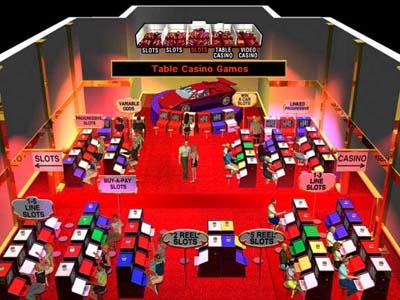
Artist's Impression for HKEx trading floorQuite honestly this proposal lacks imagination and market savvy. What we really need is to convert the trading booths into slot machines. Lots of them. And the lovely green baize of the blackjack table. And roulette wheels with stock codes marked on them. The zero goes to the house - we call that transaction levy and stamp duty. We could even give the slot-players red jackets to recreate the feel of the old trading floor. An artist's impression of the renovated trading floor is on the right - minus the jackets.
Yes, our trading hall is the natural place for Hong Kong's first legal casino floor.
Joking aside, let's send a serious message here - it is human nature to risk money on the outcome of future events. That is what we call investment and insurance. The Government's continued resistance to legalised and properly licensed gambling is contradictory to the fact that we are all placing bets with each other every day on the Stock and Futures Exchanges. Yet apart from the Government-sanctioned monopoly of the Hong Kong Jockey Club, which takes bets on horses and football and runs a lottery, it is illegal to operate a gambling establishment or even to place bets with offshore bookmakers and casinos from Hong Kong. The Government professes a belief in free markets but permits a monopoly in gambling with strictly prescribed types of bets on only 2 sports.
But it's OK to buy warrants on M-chips or short-sell stocks and it is even encouraged to buy a property with a 95% mortgage. The policy is inconsistent and hypocritical. Gambling should be legalised and liberalised.
Vast law-enforcement resources are spent on policing, prosecuting and judging gambling dens and bookmakers which operate without any kind of financial oversight, and the criminal underworld thrives on this activity simply because it is illegal. If bookmaking were legal and licensed, you wouldn't want to deal with a triad and a source of their revenue would be eroded.
The fact that a small proportion of the population are gambling addicts or alcoholics is not a sufficient reason to ban everyone from betting or drinking alcohol. America tried that with prohibition from 1920 to 1933 and it was a complete failure in every social objective.
The HKJC has been calling for a shift in taxation policy so that instead of taking an average 13.5% of each bet in duty, the Government takes a tax on profits. We support that, but only if at the same time the HKJC loses its monopoly, and we allow any properly capitalised company to take bets on anything it likes, whether it is horses, elections or tomorrow's air pollution readings. This should be regulated by a Betting Commission that checks that the firms have sufficient resources to honour their bets, just like insurance companies do. The Commission would also enter into mutual recognition with overseas betting regulators, and the anti-competitive ban on offshore betting should be scrapped. It should be legal for HK residents to bet with overseas firms as well as HK firms. After all, it's not illegal for a HK resident to pick up the phone and buy shares in Frankfurt or futures contracts in Chicago.
The World Trade Organisation's Dispute Settlement Body on 10-Nov-04 issued a report (page 272) ruling against the United States for prohibiting cross-border gambling in a case brought by the Caribbean state of Antigua and Barbuda. The US will probably appeal. As a member of the WTO, Hong Kong will ultimately be affected by this ruling.
The liberalisation of betting would create a lot of employment and broaden the tax revenue base. There is also no reason to prohibit electronic exchanges for people to make bets with each other, such as betfair.com and tradesports.com. Globally, race tracks and bookmakers, who have long enjoyed a one-sided market, whinge that exchanges make it easier to back a losing horse - but you can do that just by betting on all the others to win, and the complaint is nullified when you consider that they already allow you to bet against a football team by betting on the other side to win. Electronic exchanges can also keep audit trails of people's bets, while cash bookmakers cannot, so exchanges are actually able to assist in the never-ending battle against match-fixing and race-fixing.
In Hong Kong's case, the HKJC would argue that gambling supports charitable causes. It's their fig leaf for keeping a monopoly - but the truth is that only about 1% of each bet goes to charity, while over 5% goes to running the club and about 13.5% in tax. In a liberalised gambling regime, the Government could continue to divert part of its tax revenue to charitable causes (many of which should form part of our Government's social safety-net anyway), including counselling services for those who are addicted to gambling, whether it is on the stock market or on


Source From: https://webb-site.com

Casinos in Pattaya,Thailand


Casinos in Pattaya – Too much of a gamble for Thailand

The National Reform Council (NRC) Chairman, Thienchay Kiranandana, has announced that the proposal surrounding the legalisation of casinos in Thailand has not come from the agency and is not a part of their reform plans.
Casinos In PattayaHe said that the proposal that has been widely reported, is only a personal idea and has not been officially submitted to the NRC.
“Calls to legalise casinos are not among the reform proposals we have put up,” he said.
It appears a small minority group of 12 NRC members have been discussing and planning to propose that Pattaya be selected for the first casino resort development in Thailand. Mr. Thienchay Kiranandana, it appears, does not share the same way of thinking as the 12. They propose that the income from legalising casinos would boost the economy, both locally in Pattaya and nationally. The monies raised could help the poor and help pay for further development projects.
Casinos in Pattaya – Too much of a gamble for Thailand
Maj Anan Vacharothai, a group representative, said that legalising domestic casinos in Thailand will help stop money flowing out of the country into neighbouring countries such as Cambodia, Vietnam and soon Myanmar.
Another member of the pro-casino group, Kriengkrai Phumlaojaeng, is collecting data on these casinos in order to measure their economic and social impact. Former Democrat MP Watchara Phetthong, however, is very much against the proposal. He stated that NRC members should come up with ideas to solve Thailand’s economic problems rather than supporting wicked activities. He also said that legalising gambling runs against the 12 core Thai values promoted by Prime Minister Prayut Chan-o-cha.
Casinos in Pattaya – Too much of a gamble for ThailandTo further his feelings of strong opposition Mr Watchara said that Maj Anan, who is a former Pheu Thai MP, is seeking to implement Thaksin Shinawatra’s dream plan of open legal casinos in The Kingdom.
The question of legalising casinos comes up every few years or so in Thailand, but this time could plans be approved? There will always be those that want and those that don’t want legitimised gambling in The Kingdom. Whilst it is true that casinos developed in a city such as Pattaya would be a huge boost to the local and national economy, there are many concerns too. To introduce legalised casinos into Thailand is a massive cultural shift, the proposal has been met with much opposition. Ultimately, following in depth studies, will the decision made be one of economics or is it too much of a cultural shift to be acceptable?

Source From: http://lovepattayathailand.com

Casino boom in Vietnam


An academic has issued a warning after the recent announcement by Las Vegas Sands that it plans to build casinos in Vietnam.
Marina Bay Sands in Singapore brings huge profits to Las Vegas Sands
Dr. Vu Dinh Anh warned about casino boom in the country like golf courses and universities.
Sheldon Adelson, Chairman of Las Vegas Sands, said the group would invest billions of USD in building resort-entertainment complexes in Hanoi and HCM City.
However, the chairman said, “We’ll not set up a casino in a place where local people can’t have access to that facility”. According to him, the complexes will contain a 1,800 room hotel, with additional areas for museums, conference halls and an entertainment centre. The casinos would account for only 2%-4% of the projects’ area.
Each complex is expected to create jobs for between 12,000 and 14,000 local people.
Economist Vu Dinh Anh said Vietnam should foster casino development and consider it as just another form of entertainment industry. “It would be a good idea to build a casino as part of a comprehensive resort-entertainment complex,” Anh shared.
Currently, many Vietnamese well-to-do people travel to Hong Kong, Macau, Cambodia, and Singapore to splurge their money on gambling at luxury casinos.
“Our country should develop casinos in order to attract more tourists and multiply state budget if we can properly manage them,” he emphasised.
In order to ensure safety at these institutions, Vietnam should follow the US management models.
He, however, warned that due attention should be paid to the projects in a bid to prevent the uncontrollable development that has plagued golf courses and universities.
Even though the investor said casinos would occupy just 2%-4% of the complex areas, they would likely change their plans to expand the facilities, challenging Vietnamese authorities.
Until now, despite the Government turning down over 70 golf course projects nationwide, the country still has 90 golf courses, two third of which are really being used as a tool to trade in real estate based on agricultural land.
The same situation has happened with colleges and universities. Due to lax management, the number of universities and colleges has mounted to around 450 in Vietnam.
The consequence is that many of these schools have failed to enroll students or accept those who the necessary examination marks of six or seven for three subjects.
In order to deal with the problems, the Ministry of Education and Training has requested a moratorium on new universities and colleges in order to scrutinise the quality of education offered at current institutions.


Source From: http://businesstimes.com.vn

20 Vietnamese Foods in your trip


1. Bánh Cuốn (Steamed Rice Cake)

Bánh Cuốn (Steamed Rice Cake)
Soft, delicately thin sheets of steamed rice cakes are served with crispy fried shallots, chopped cucumber, shredded romaine lettuce, bean sprouts, slices of pork sausage, chopped shrimp, scallions, and ground beef - all drizzled with fish sauce. Sometimes, the restaurants that serve these will usually complement bánh cuốn with crispy potato shrimp tempura and deep fried mung bean batter cakes.
OMG it’s a flavorful heaven on a plate!

2. Bánh Mì (Vietnamese Sandwich)

Bánh Mì (Vietnamese Sandwich)
French baguettes filled with goodness! Once you’ve tried one, the regular boring turkey sandwiches just won’t be the same.

3. Gỏi cuốn (Spring Rolls)

Gỏi cuốn (Spring Rolls)
Not to be confused with your traditional egg rolls, these are different in that they’re not fried but still equally delectable! These come in varieties of ingredients but my favorite spring rolls are the grilled pork (nem nướng̣ cuốn - image shown).
Dip it in peanut sauce, and your tastebuds will go on the ride of your life!

4. Bánh Xèo (Sizzling Pancake)

Bánh Xèo (Sizzling Pancake)
Crispy golden crepes of delectableness! GET IN MY MOUTH

5. Bánh Khọt (Miniature Fried Pancakes)

Bánh Khọt (Miniature Fried Pancakes)
The mini version of the crepes are these little morsels of deliciousness!

6. Cơm Tấm (Broken Rice)

Cơm Tấm (Broken Rice)
This isn’t just your normal everyday rice, this stuff is made from fractured rice grains! And always served with the yummiest sides to go along with it! NOM NOM is it lunchtime yet?!?

7. Bún Bò Huế (Beef Vermicelli Soup)

Bún Bò Huế (Beef Vermicelli Soup)
If you’re a little more adventurous, try this spicier version of phở that has a bolder flavorful broth of beef rice vermicelli soup with lemongrass and pork.
My mouth is watering, you guys!

8. Bún Riêu (Crab and Tomato Noodle Soup)

Bún Riêu (Crab and Tomato Noodle Soup)
For a lighter broth option, this is one of my favorites when it comes to home-cooked meals!

9. Hủ tiếu (Rice Noodle Soup)

Hủ tiếu (Rice Noodle Soup)
Known as Kuy Teav in Cambodia, this rice noodle soup dish can be made with a variety of ingredients. It can also be served dry (khô) without the soup! Mmmm, it’s so hard to choose what to get at a Vietnamese restaurant…

10. Bánh Canh Bột Lọc (Thick Noodle Soup)

Bánh Canh Bột Lọc (Thick Noodle Soup)
A soup with thicker noodles. If you haven’t already noticed, there are TONS of variations when it comes to noodles and soup! SLURP SLURP SLURP

11. Canh Chua (Vietnamese Sour Tamarind Soup)

Canh Chua (Vietnamese Sour Tamarind Soup)
Another one of those home-cooked meals that brings back nostalgic memories. This goes super well with a side of rice!

12. Cháo (Congee/Porridge)

Cháo (Congee/Porridge)
The Vietnamese version of chicken noodle soup. I can always count on cháo to get me through my colds and flu illnesses!
Serving suggestion: get some Chinese donuts (called Youtiao), break them apart and put it in the congee to eat with the soup. SO MUCH YUM.

13. Bò lúc lắc (shaken beef)

Bò lúc lắc (shaken beef)
theravenouscouple.com / Via flickr.com
In the words of my non-Asian boyfriend who I introduced this dish to: WHERE HAVE YOU BEEN ALL MY LIFE?!?

14. Cơm chiên (fried rice)

Cơm chiên (fried rice)
This is not your typical fried rice, folks! Vietnamese style fried rice has your typical veggies with bits of egg, cilantro and bits of super tasty sausage (lạp xưởng). When I brought these home-cooked fried rice dishes to elementary school potlucks, it went FAST.

15. Cá Kho Tộ (Caramelized Fish in Clay Pot)

Cá Kho Tộ (Caramelized Fish in Clay Pot)
If you talk to a Vietnamese person, this is the ultimate in comfort food.

16. Bánh Cam (Orange Sesame Ball)

Bánh Cam (Orange Sesame Ball)
Not to forget the ever important desserts, here we have some sesame goodness!

17. Bánh Tét (Sticky Rice Cake)

Bánh Tét (Sticky Rice Cake)
More often found during the Vietnamese New Year (Tét, which gives these their suitable names), these savory sticky rice cakes wrapped in banana leaves are usually filled with mung bean paste or my personal favorites - the ones with banana and sweet red bean filling.

18. Bánh Kẹp Lá Dứa (Coconut Pandan Waffles)

Bánh Kẹp Lá Dứa (Coconut Pandan Waffles)
If you haven’t tried one of these wonderful gems, I FEEL SORRY FOR YOU.

19. Chè (Sweet Desserts and Puddings)

Chè (Sweet Desserts and Puddings)
vietspices.blogspot.com / Via blogger.com
Too many to name when it comes to chè as there are so many varieties! But my personal favorite is the rainbow dessert (Chè Sương Sa Hạt Lựu - image shown above).

20. Phở (Vietnamese Noodle Soup)

Phở (Vietnamese Noodle Soup)
DUH: I couldn’t end a list of Vietnamese food without phở! FYI: it’s pronounced as “fuh” (hey, that rhymes!)

Thai food in your good trip


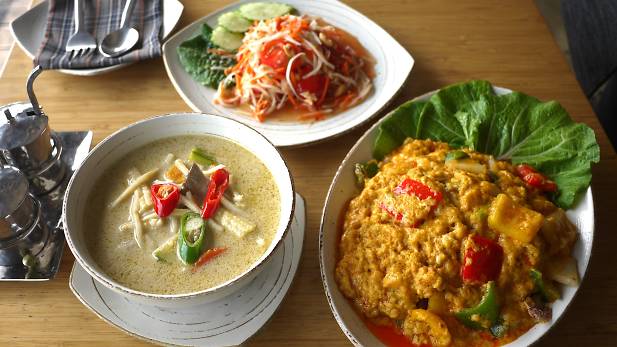
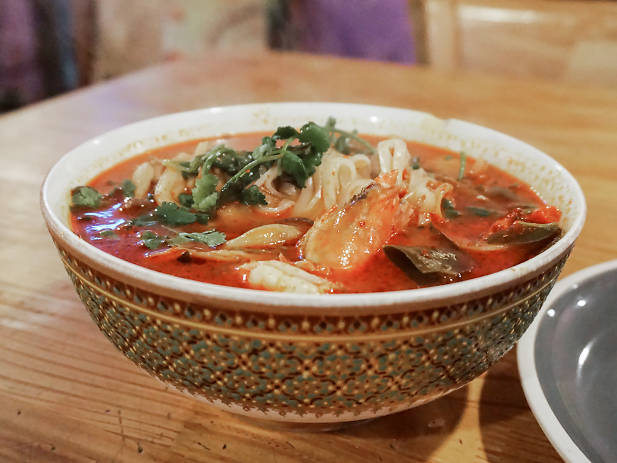
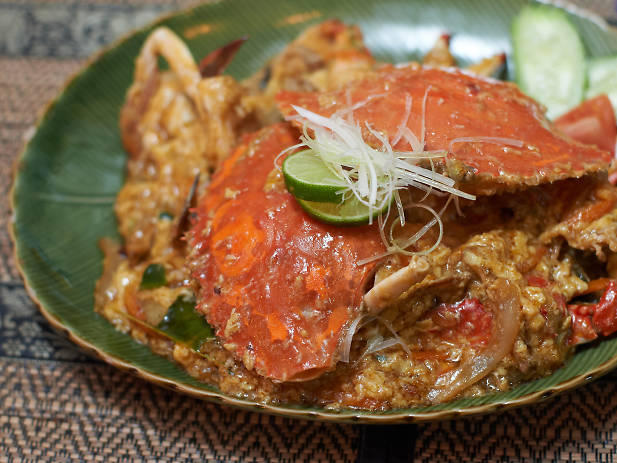
What can account for the boom in Seoul's Thai food restaurants? Of course, their sweet and savory dishes are delicious, but how has that discovery landed upon Korea's capital? Perhaps one main reason is the growing number of Koreans traveling to Thailand and finding the cuisine simply irresistable. Seoulites are crazier now for authentic Thai food than they've ever been in the past. With the quantity of Thai restaurants growing, it's inevitable that the competition amongst these restaurants will grow stiffer. Who has the best pad thai? Which places offer green curry that's made with the freshest coconut milk and chili peppers? Time Out Seoul finds out.
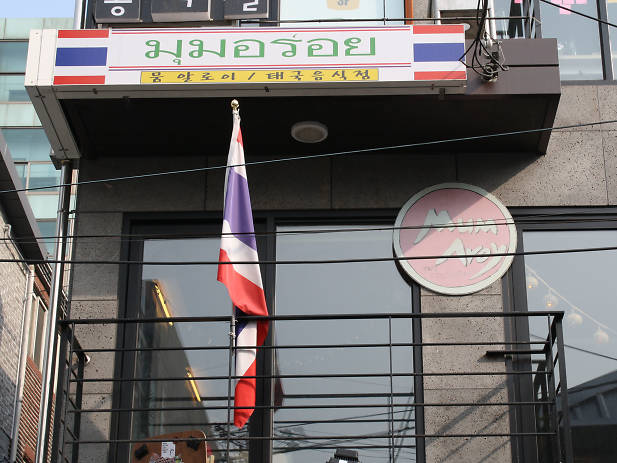
Mum Aroy


Thai food is hot hot hot in Seoul right now, and Mum Aroy opened mid-2014 in the thick of it. Fortunately for us, it’s a delicious addition to the scene, and well worth visiting if you’re looking for a good pad thai in Hongdae. Husband and wife team Kim Ji-hoon and Gil Seung-mi both trained as chefs (he in Japanese cuisine, she in Italian), but learned Thai cuisine by working with Thai chefs who had themselves worked in upscale Bangkok hotel restaurants.  

 Tuktuk Noodle Thai
Tuk Tuk Noodle Thai is a gem of restaurant located in the basement of a small building near the entrance of the Yeonnam-dong alley. It would not be an exaggeration to state that Tuk Tuk was the chief cause of Yeonnam-dong's renaissance as a “hot” place. With the growth of unique, small restaurants beginning to form a bustling commercial district, customers have flocked to the area and created long, eager lines of ready diners.   


Ban Pichai

Ban Pichai

Ban Pichai is famous for authentic Thai appeal since its opening.”Ban Pichai” means “brothers’ place” in Thai language. The restaurant is actually run by two Koreans familiar with Thailand food culture. They wanted to bring enjoyable authentic Thai food that you would expect in the main street of Bangkok at a “reasonable price” in a “friendly atmosphere.” 


Source From: http://www.timeout.com

Khmer Food on trip

Crab with Kampot Pepper
Cambodian cuisine draws heavily from its neighbouring countries of Thailand and Vietnam although it is generally less spicy. Many dishes feature fish - both from the sea and from the mighty Mekong river that flows through the country and use local herbs and spices most notably the world-famous Kampot Pepper.
Most dishes include the ubiquitous fermented Fish Sauce and some sweetness alongside the spicy undertones and are served with rice or noodles.
The original chickens were native to the jungles of South-East Asia before being spread around the world and the local Cambodian chicken retains a link with the past being less-heavily muscled and having a much gamier taste.
 PictureSerendipity Beach Road Opposite Utopia
Aimed directly at its tourist clientele most of the floor space of this minimart is given over to various kinds of beverage. Wines, spirits, beers and cold drinks but some tolietries and food stuffs including sandwiches and some fresh fruit. Also has an eating area situated infront with tables and TV showing sporting events where you can by fast food including hot dogs and burgers. Open 24 hours with limited moto parking.


Source From: http://www.isihanoukville.com

The Nam Bo Boutique Hotel****


Our brief comments:Nam Bo Boutique Hotel
The Nam Bo Boutique Hotel sits at a prime location in the city of Can Tho, directly overlooking a linear park along Can Tho River and with a view out to the towering Can Tho Bridge crossing the Mekong.

In the centre of Ninh Kieu Pier, Nam Bo is just across from the statue of Ho Chi Minh and a mere stone’s throw from river transport connections. In a classic building, newly renovated in 2011, this all-suite hotel encompasses two commendable restaurants.
The Nam Bo Boutique Hotel’s 7 distinctive suites all have a living room with a view and a separate bedroom, the two corner suites featuring mesmerising panoramas of this lively riverine city. There is a flat screen TV in each living room and bedroom, and high speed LAN Internet and wifi connections are provided. In-room dining can be arranged with advance notice. The suites are on the 2nd and 3rd floors, accessed by elevator from reception.
Room in Nam Bo Boutique HotelThe ground and first floors are taken up by Nam Bo Restaurant, established since 1998, serving a full variety of traditional Vietnamese dishes, Mekong specialties and Western classics. L’Escale, Nam Bo’s fine dining establishment, puts on quality European-style meals in the more removed setting of the fourth floor open-air lounge. The fully stocked wine cellar is well-equipped to complement the menu and is sure to please all palates.
With an ideal location and a set-up tailored for individual attention, the Nam Bo delivers a delightful boutique hotel experience.


source From: http://www.haivenu-vietnam.com