Showing posts with label More. Show all posts

Friday, April 22, 2016

Two airports in northern Thailand


BANGKOK (AP) — Two airports in northern Thailand said Wednesday that nearly 150 flights will be canceled or rescheduled during a three-day festival next week when revelers launch lanterns into the sky that can pose danger to airplanes.
The cancellations will affect evening flights from Nov. 24-26, when Thailand celebrates the Loy Kratong festival.
Chiang Mai International Airport, the main airport in northern Thailand, said in a statement that it will cancel 84 flights, including 12 to international destinations, during the three-day festival period. It will also reschedule 51 flights.
Chiang Rai International Airport plans to cancel six flights and reschedule five during the same period, said airport official Saengduan Hongsaenkham.
Most of Thailand celebrates the festival by floating small boat-shaped baskets with flowers and candles into lakes and rivers to carry away their bad luck. But revelers in northern towns choose to send off their bad luck in hot-air balloons or lanterns.
Traditionally, the lanterns were from lightweight bamboo and paper, with a candle inside to provide hot air to lift them into the sky. But lately they have become larger and more powerful and sophisticated, with some using fuel canisters and heavy frames.
The Chiang Mai airport urged revelers to respect a city regulation that residents from five districts surrounding the airport can only release lanterns on Nov. 25 after 9 p.m.
Officials will be assigned to monitor the runways to remove any lanterns, the statement said. During last year's festival period, 142 lanterns landed on the runway, down from 1,414 in 2013, thanks to awareness campaigns.

Source From: http://www.sandiegouniontribune.com

The Kingdom of Thailand is an independent country

History, Culture and Climate

The Kingdom of Thailand is an independent country that lies in the heart of Southeast Asia.
It is bordered to the north by Laos and Burma, to the east by Laos and Cambodia, to the south by the Gulf of Thailand and Malaysia, and to the west by the Andaman Sea and Burma. Its maritime boundaries include Vietnam in the Gulf of Thailand to the southeast and Indonesia and India in the Andaman Sea to the southwest. The capital and largest city of Thailand is Bangkok. It is also the country's center of political, commercial, industrial and cultural activities.
History

The region known as Thailand has been inhabited by humans since the Paleolithic period, about 10,000 years ago. Prior to the fall of the Khmer Empire in the 13th century, various states thrived there, such as the various Tai, Mon, Khmer and Malay kingdoms, as seen through the numerous archaeological sites and artifacts that are scattered throughout the Siamese landscape. Prior to the 12th century however, the first Thai or Siamese state is traditionally considered to be the Buddhist kingdom of Sukhothai, which was founded in 1238.
Following the decline and fall of the Khmer empire in the 13th - 14th century, the Buddhist Tai Kingdoms of Sukhothai, Lanna and Lan Chang were on the ascension. However, a century later, Sukhothai's power was overshadowed by the new kingdom of Ayutthaya, established in the mid-14th century in the lower Chao Phraya River, or Menam area. Ayutthaya's expansion centered along the Menam while the in the northern valley, Lanna Kingdom, and other small Tai city-states, ruled the area.
After the fall of the Ayutthaya in 1767 to the Burmese, King Taksin the Great moved the capital of Thailand to Thonburi for approximately 15 years. The current Rattanakosin era of Thai history began in 1782, following the establishment of Bangkok as capital of the Chakri dynasty under King Rama I the Great. A quarter to a third of the population of some areas of Thailand were slaves.
Thailand retained a tradition of trade with its neighboring states, from China to India, Persia and Arab lands. Ayutthaya became one of the most vibrant trade centers in Asia. European traders arrived in the 16th century, beginning with the Portuguese, followed by the French, Dutch and English.
Despite European pressure, Thailand is the only Southeast Asian nation that has never been colonized.
Two main reasons for this were that Thailand had a long succession of very able rulers in the 1800s, and that it was able to exploit the rivalry and tension between the French and the British. As a result, the country remained a buffer state between parts of Southeast Asia that were colonized by the two colonial powers. Despite this, Western influence led to many reforms in the 19th century and major concessions, most notably being the loss of a large territory on the east side of the Mekong to the French and the step-by-step absorption by Britain of the Shan (Thai Yai) States (now in Burma)[citation needed] and the Malay Peninsula. The losses initially included Penang and Tumasik and eventually culminated in the loss of four predominantly ethnic-Malay southern provinces, which later became Malaysia's four northern states, under the Anglo-Siamese Treaty of 1909.
In 1932, a bloodless revolution carried out by a small group of military and civilian officials resulted in a transition of power, when King Prajadhipok was forced to grant the people of Siam their first constitution, thereby ending centuries of absolutist monarchy. During World War II, the Empire of Japan demanded the right to move troops across Thailand to the Malayan frontier. Japan invaded the country and engaged the Thai army for six to eight hours before Phibunsongkhram ordered an armistice. Shortly thereafter Japan was granted free passage, and on December 21, 1941, Thailand and Japan signed a military alliance with a secret protocol wherein Tokyo agreed to help Thailand regain territories lost to the British and French. Subsequently, Thailand undertook to 'assist' Japan in its war against the Allies, while at the same time maintaining an active anti-Japanese resistance movement known as the Seri Thai. After the war, Thailand emerged as an ally of the United States. As with many of the developing nations during the Cold War, Thailand then went through decades of political instability characterized by coups d'état as one military regime replaced another, but eventually progressed towards a stable prosperity and democracy in the 1980s.
In 1997, Thailand was hit by the Asian financial crisis, and the Thai baht for a short time peaked at 56 baht to the US dollar compared to about 25 baht to the dollar before 1997. Since then, the baht has regained most of its strength and as of May 2009 is valued at 35.17 baht to the US dollar.
The official calendar in Thailand is based on the Eastern version of the Buddhist Era, which is 543 years ahead of the Gregorian (western) calendar. For example, the year AD 2009 is 2552 BE in Thailand.
Local Thailand time: GMT + 7 Greenwichmeantime.com
Mainland Territory: 514,040 sq. km
Population: 65,444,000 (est 2006)
National Capital: Bangkok

Climate
Thailand's climate is tropical, high both in temperature and humidity, and dominated by monsoons. April and May are the hottest months of the year, when even the locals are moved to complain about the heat. June sees the beginning of the South West Monsoon, and brings with it the rainy season, which continues intermittently until the end of October.
From November to the end of February the climate is much less trying with a cooling North East breeze and a reduction in the humidity level. This is also the main tourist season, and the best time to visit Thailand. The north and north-east are generally cooler than Bangkok in winter, and hotter in summer. In the far north, around Mae Hong Son temperatures can occasionally drop as low as 2oC
Language
Thai is one of the oldest languages in East and South-East Asia. It is a monosyllabic language which uses five tones (high, mid, low, rising, and falling tone) to alter the meaning of a single syllable. This makes it rather tricky to learn for most Westerners used to speaking non-tonal languages.
The Thai script, introduced by King Rham Khamhaeng in 1283, consists of 44 consonants and 48 vowels, and is of Sanskrit origin.
Population and People
Thailand is often called the "land of smiles", and rightly so because you will see more smiling people here than anywhere else in the world. The country has a population of about 59 million, with some 6.7 million of these people living in the Bangkok area. Approximately 75% of the citizenry are ethnic Thais, 14% are Chinese, and the remaining 11% are mostly Indian, Malay, Karen, Khmer, or Mon. The literacy rate is high at about 94% and the average life expectancy is 66 for men and 72 for women.
Thai people are friendly and tolerant but there are a few Do's and Don'ts which you should observe. Avoid touching people on the head, and keep your feet on the ground where they belong. Stay calm, smile and enjoy the hospitality of your hosts.
The official language is Thai, but English is widely spoken in all major tourist locations. However if you are travelling around Thailand it is a good idea to buy a phrase book

Festivals and Holidays

New year’s day
In 1940, Thailand moved its New Year's Day from April 13th to January 1st. The old New Year is still a holiday called Songkran. Years are counted as the Buddhist era (B.E.) which started 543 years earlier than the Christian, era, therefore 2002 AD is the year 2545 BE.
Makha Bucha Day
End of February/beginning of March, depending on the moon. This commemorates the day when 1250 of Buddha's disciples gathered spontaneously to hear him preach. Buddhists visit Wats and make merit by such acts as releasing caged birds. In the evening the celebrations culminate in a candle lit procession around the main temple building.
Songkhran 13-15th April
This is the celebration of the old Thai New Year. Buddhists visit the temple for the ceremony of Rod Nam Dam Nua. They sprinkle water on the Buddha images, and on the hands of the
monks and novices at the temple, as an offering to express confidence that the supply of water will be adequate to cover the dry season.Songkhran is a time when the Thai family will try to be together, and many people will travel back to their home village. This holiday has now become secularized, with exuberant merrymakers taking to the streets throwing water at each other, and you, by the cup full, the bucket full, or even with a hose. To add to the fun, talc is mixed with the water and may be daubed on your face. Take it all in good spirit, no one is exempt, not even the policemen. The cool water may even be a welcome relief as the festival coincides with the time when the sun is due overhead and the weather can be very hot.

Religion
About 95% of the Thai population are Buddhist, which is a religion based on the teachings of Buddha, "the enlightened". Siddhartha Gautama, the Lord Buddha, was born in 623 B.C. in Lumbini Nepal, and subjected himself to many years of severe austerities to arrive at a vision of the world which is the basis of Buddhism. Gautama Buddha spoke of four noble truths :
History, Culture and Climate
  • "Existence is suffering" (The truth of suffering).
  • "Suffering is caused by desire" (The truth of the cause of suffering).
  • "Eliminate the cause of suffering and the suffering will cease to arise" (The truth of cessation of suffering).
  • "The eight fold path (or middle way) is the way to eliminate desire" (The truth of the path).
The main theme of Buddhist belief is that of karma, the evaluation of all life's events and, after ones death, the rebirth of that karma in a new existence. In this way everyone has it in his own hands to determine his next life, for better or worse. The Thai proverb "do good and receive good, do evil and receive evil" sums up this concept well. Buddhism is ever present in Thai life from the myriad Buddha images to the saffron-robed monks and many wat (temples) at which local people worship. As a visitor to Thailand you are welcome to visit the wat but please remember to dress respectfully, no shorts or vests. Remove your shoes before entering any temple building, and never touch the head of a Buddha image.


Source From: http://www.anntours.com

Wednesday, April 13, 2016

Singapore Zoo River Safari

While Singapore is popularly known as Asia's Little Red Dot mainly due to its small land area, this has never hindered the nation in becoming one of the fastest growing country in the region (if not the world). Take their wildlife reserves for example, the country is home to hundreds of land, sea and air creatures and mind you, they all live freely in their own natural habitat instead of being thrown in a cage. This was one of the things that has impressed me when I first visited the Singapore Zoo more than two decades ago.

river safari sg 9
Growing up, my parents would make it a point to take Pan and I to various educational sites be it in Manila or outside of the country. They both believe that learning is an ongoing process and this should not be limited to what was taught within the four corners of the classroom. I really love going on trips with them as we always come back learning something new. So, when my family came to visit me a few weeks ago, I think it's about time to return the favor. I then made sure to include visiting the newly-opened River Safari as part of our itinerary.

river safari sg 2
River Safari is the newest addition to Singapore's Wildlife Attractions which includes the Singapore Zoo, Jurong Bird's Park and the Night Safari. Here, visitors will see all types of fresh water creatures from huge crocodiles, a wide array of birds (!), the cutest fishes and the very lovable panda bears from China -- Jia Jia and Kai Kai!


I wouldn't want to spoil the excitement for you so let me just share with you a couple of photos that I took during our visit to the River Safari and let's leave the rest for you to explore and see for yourselves:

river safari sg 1

river safari sg 8

river safari sg 3
The highlight of my trip was in the Giant Panda Forest. I saw two really adorable Red Pandas which for some reason reminds me of my dear Scottie back home. It must be because they share the same reddish-brown color and they have the same cute, inquisitive and adorable faces just like my dog Scottie.

river safari sg 4
There's Kai Kai who unfortunately was sound asleep. Even his partner Jia Jia hid in her den and was fast asleep too.

river safari sg 6
We also took the boat ride (S$5) which was worth it. Without taking the boat ride, you'll miss seeing the flock of flamingos, the Red Howler Monkeys and the most dramatic of all, the Jaguar.

river safari sg 7
We failed to get a nice photo of how the Jaguar suddenly showed up with its fierce look. It seemed like we're in the movies!

river safari sg
The River Safari wasn't as big as we were expecting it to be but we went through all 8 great rivers of the world and we were able to come up close to the different species and creatures that calls these rivers their home. Definitely a fun way to spend a nice afternoon with the family.

Just make sure to check the weather before going as it can really be a bummer if it's raining. For one thing, you'll definitely end up soaked wet during the boat ride. I also recommend booking online as there's a 5% discount plus it will guarantee you a slot for the boat ride which has very limited tickets available per day.

There are two food establishments inside River Safari and a couple of fast food outlets outside such as KFC, Ben & Jerry's, Ah Meng Restaurant and a lot more.


Source From: http://www.frannywanny.com

Happiness at the River Safari

I didn’t realised that there were three zoos in Singapore. To me, they were the same; albeit different segments offering unique experiences at a common location. Well, I was wrong and this was something that I discovered only during one of my recent fieldtrips. Apparently, I was not the only one, as most of my Singaporean classmates expressed the same ‘oohs and ahhhs’. Bewildered we were!
DSC_7989
Anyway, I had the good fortune to visit Asia’s first and only river-theme wildlife park, otherwise known as the ‘River Safari’ yesterday! This ‘zoo’ is the newest among the three and it just opened last year (2013). Divided into two zones; River of the World and Wild Amazonia, the park is easy to navigate and has the right balance of fun yet educational elements! While the Singapore Zoo may seem overwhelming at times, the well-contained River Safari promises a fulfilling experience since it is so manageable (to me at least)!
OLYMPUS DIGITAL CAMERA Prior to our visit, I have heard comments that there’s nothing much at the River Safari and that it is very small. Well, I was there from 10am to 4pm and still, I cannot say that I’ve read all the informative panels! There’re just so much weird creatures interesting facts to learn! If you have been to the other prominent attractions around Singapore, you might feel as I did that the River Safari feels like an amazing combination of the Singapore Zoo, Universal Studios, the S.E.A. Aquarium at Resorts World Sentosa and Gardens By the Bay with a nice twist and more!

River Safari: 7 happy experiences & reasons to visit

DSC_7909

1. An enriching walk to learn about rivers in the world!

Rivers of the world offers interesting facts about seven famous rivers around the world (duh!) with some of the weirdest river creatures! This interesting indoor + outdoor walk can sometimes be terribly crowded and much patience will be required if you are there on a Sunday morning. Anyway, my favourite river has got to be the Ganges River, as the Indian Gharial is so magnificent!
OLYMPUS DIGITAL CAMERA
To the Hindus, the Indian gharial is a sacred animal. The goddess, Mother Ganga, is said to travel the waters on a gharial. See how big it is!
crocs
#Tip We realised that there were lesser people in the afternoon and that allows a leisurely and far more enjoyable walk!

2. Get closer to nature & indulge in beautiful scenery

It finally rained after a long period of dry spell and the air smelt so fresh! Looking out into the still waters made me feel like I’ve stepped back into nature.
OLYMPUS DIGITAL CAMERA

3. Blow a kiss (or several!) to manatees that hover above you

At the Amazon flooded forest (reminds me of the S.E.A. Aquarium!), you would find the world’s largest fresh water aquarium! Be awed by HUGE manatees and other water creatures that swim before your eyes. This immersive exhibition makes me feel small (not in a bad way!) and I left feeling amazed by the mysterious underwater eco-system taking place across the South American rainforest. It is always a wonder to think about how nature works!
OLYMPUS DIGITAL CAMERA

4. Embark on a boat adventure into the mysterious Amazon wilderness!

OLYMPUS DIGITAL CAMERA
The Amazon River Quest was mum’s favourite and excitement shone in her eyes, as she finally sat onboard the boat. Amid the rain and insane queues, we managed to sail along with our panda suit raincoat. It was a short ride of 10 minutes but we were exhilarated! Gentle raindrops failed to dampen our spirits, as we sailed passed Brazilian tapirs, sleeping jaguars, preening flamingos and more! Even the smells are unforgettable.😀
OLYMPUS DIGITAL CAMERA
#Tip Purchase boat tickets online or early in the morning at the visitors centres, as there are limited availability and usually sold out by noon. Ticket price per adult is S$5 child S$3. In case of rain, bring along a raincoat (umbrellas not allowed onboard) or purchase a cute panda raincoat for S$5 at the souvenir shops.

5. Gawk at the pandas shamelessly (even I couldn’t resist!)

DSC_7757
Another highlight of the River safari is the Giant Panda Forest and this might possibly be the main reason why people visit at all. It is unfathomable how two flurry animals with dark eye rings could render otherwise reserved adults into excited beings that can’t stop gawking and snapping away at the camera. Allow me to say this just once – they are soooooooo cute!
DSC_7735 DSC_7873
Ahem. (Resumes poise) Anyway, the Giant Panda Forest is the largest panda exhibit in Southeast Asia and the two giant pandas (Kai Kai and Jia Jia) are gifts from China. They are comfortably housed in a bio dome with a cool climate of 18oC to 22oC, reminding me of Gardens By the Bay. Along with them are the adorable red pandas and golden pheasant!
DSC_7675
Red pandas!
#Tip We went once in the morning (super crowded!) and returned in the afternoon again after our boat ride. There were considerably lesser people in the afternoon and panda Kai Kai was out eating😀

6. Pose & eat (ahem!) pandas:)

I hate to admit this, but one of the reasons why I wanted to visit River Safari was because of the food served by the Mama Panda Kitchen. What can I say? I am a glutton for food and more so, for cute-looking food. Apparently, I was not the only one. Queues in the Mama Panda Kitchen are never-ending, and all because of the Panda Pau (S$2.90 each) – buns that resembles panda. I especially like the Giant Panda cappuccino (S$5.50).:)
DSC_7911
#Tip If you do not like queuing but still want a piece of panda snack, do check out the kiosk outside of the Giant Panda souvenir shop. There are cookies in the form of panda that you may bring home.
OLYMPUS DIGITAL CAMERA

7. Explore the Amazon forest & say hi to squirrel monkeys

They call this the Squirrel Monkey Forest and perhaps, it does resemble a forest for the squirrel monkeys that are so tiny! Trek on foot at your own pace and say hi to these adorable (yes, again) creatures.
OLYMPUS DIGITAL CAMERA
Walking into the Squirrel Monkey Forest.
16.031
#Tip There is a signboard at the left side of the entrance that reminds visitors of certain things not to do. It is not advisable to carry a plastic bag while walking through this ‘forest’ because the monkeys tend to associate these bags with food.


Source From: https://travelbeckons.com

Tuesday, April 12, 2016

The Singapore v Hong Kong

Ocean Park Hong Kong
Singapore v Hong Kong: Thibault Paquin Discusses Asia's Attractions Markets

 Related: Theme Parks: Singapore - the Lion City roars in 2010/ ‘Live Park’, World’s First 4D Avatar Theme Park, Success In Korea/ Hong Kong: IAAPA's Asian Attractions Expo Reaches New Heights 
Thubault Paquin principal of celebrating life ltdBy Thibault Paquin
Thibault Paquin (left) is the founder and principal of Celebrating Life Asia, an independent consultant and development company for the leisure & entertainment industry. He is also the managing director of iVenture Card Asia, which is operating attractions passes in Hong Kong, Macau and Singapore.

Originally from France Thibault holds an MBA from HEC Paris; he is an expert in hospitality and leisure development in Asia where he spent the last 10 years, partly with Accor Hospitality, between Thailand, Indonesia, Philippines, South Korea, Vietnam, Singapore and Hong Kong.


All eyes are turned to Asia. A growing middle class and regional travel made easier foster a strong growth of the attractions industry. Now we take a closer look at the two regional magnets of Singapore and Hong Kong: how do they compare, compete and what role their attractions play in building two of the world’s top tourist destinations?

Singapore, the island state, managed a superb shift from what was once considered a ‘boring’ destination to one of the most exciting in Asia, with attractions playing a pivotal role. Back a few years ago the government decided to put tourism at the forefront of economic development. Huge budgets were allocated to build superior infrastructure (MTR, airport), promote the destination (advertising, events e.g. F1 Grand Prix) and develop its attractions: Singapore Flyer, Singapore Zoo, Sentosa all received government help. More recently Singapore used incentives to get private investors develop new world-class attractions, and there is no betterHong Kong Disneyland Toy Story Land incentive than a casino license! The result:  arrivals to Singapore increased by 35% between 2006 and 2011 and Singapore’s attractions welcomed almost 50million visitors in 2011.

Bustling Hong Kong, on the contrary, never feared of being boring but had to manage a soaring increase of visitors from mainland China since 1997.The government decided to build two massive family attraction-destinations, Ocean Park and Hong Kong Disneyland, both with huge capacity and strong marketing appeal. HK$9.1billion (US$1.2billion) were spent in the last 5 years to expand both parks. Whether they ran out of budgets or thought that was enough (Hong Kong has many non-gated attractions/sights, e.g. The Peak, Victoria Harbour) the government did not support the development of smaller attractions made otherwise impossible due to the exorbitant real estate prices. The result: Hong Kong’s 2 theme parks welcomed 13million visitors in 2011 (of which more than 50% from Mainland China) but on the other hand the Hong Kong Association of Attractions and Amusement Parks formed earlier this year has only 7 founding members, so few for a city welcoming over 40million visitors!

Different visitors origins and different tourism development strategy produced two very different sets of attractions in Singapore and Hong Kong. When it comes to selling the destination as an ‘experience’, which seems to be the recent trend in destination marketing, Singapore will put forward a unique combination of star attractions along with star restaurants and retail outlets/shopping malls whereas Hong Kong will promote a more wholesome city experience based on neighborhoods, sightseeing and street shopping with theme parks as complementing family activities. Two very compelling ‘experiences’ indeed but the difference shows in the bottom line: average tourist spending was 40% higher in Singapore than Hong Kong last year!

The more the merrier

One thing the 2 cities have in common is acute competition, which results in healthy attendance growth. In the city-state of Singapore over 40 attractions managed to reach, through competition (or maybe is it coopetition?), a total of nearly 50million visitors in 2011. In Hong Kong, the ‘war’ between Ocean Park and Disneyland boosted overall theme park visitor numbers from only 3million before the arrival of Mickey to 13million in 2011.

Singapore zoo night safari logoSingapore has adopted an attractions hub strategy where it facilitates the concentration of attractions in identified precincts giving them more visibility and building sub-brands within the main Singapore brand: Mandai Lake with the famous Singapore Zoo, Night Safari, new River Safari coming soon and plans for hotels and other facilities; Sentosa with over 15 attractions, the new Resorts World Sentosa including Universal Studios Singapore, the Maritime Experiential Museum and Marine Life Park and a 2015-2020 master plan expected to take the island to a whole new level.

Further north, Hong Kong’s interpretation of hubs is a little more extreme with everything concentrated in two sprawling theme parks. Together with the Peak (where Madame Tussauds Hong Kong is located) they are the only world-class attractions really! Things might change as the Hong Kong Tourism Board is trying to promote Lantau Island as a sub-brand with Disneyland as an anchor. Also, on Hong Kong Island, the MTR station being built for Ocean Park will generate more consolidation opportunities.

Out with the old, in with the new?

Obsession with modernity on the one hand: first Disneyland in Asia for Hong Kong, first integrated casino resorts in Asia for Singapore, 2 new picture-Ocean Park Hong Kongperfect landmarks with Sky100 Hong Kong and Singapore Flyer proudly standing in the cities’ new skylines. Nostalgia and celebration of the ‘good old days’ on the other hand: Ocean Park opens the very popular Old Hong Kong bringing back the many fond memories of life in the '50s -'70s, Singapore Flyer adds old food carts, and more heritage-inspired attractions are in the planning (e.g. project at Ngong Ping 360 Village in Lantau and redevelopment of Images of Singapore in Sentosa).

So what to think? Are heritage and modernity aimed at pleasing different markets or is it maybe the sign these two destinations are established, proud of their identity/heritage but resolutely modern and forward thinking. Take the Louvres pyramid, a classic example of a modern twist on Paris ‘grande dame’ of museums.

Speaking of museums, it is interesting that both cities each have a very ambitious defining museum project. Hong Kong chose British architect Norman Foster to build the M+ Museum, which will “focus on 20th and 21st century visual culture, broadly defined, from a Hong Kong perspective and with a global vision”. Singapore went for French architect Studio Milou to build the National Art Gallery, which aim is to “strengthen Singapore’s role as a regional and international hub for visual arts”.  It is not only about heritage; it is a race to take a regional and global leadership role in arts and culture. New York, Paris, London, watch out!

Envious neighbours

With tourist arrival growth of 13-16%, who would not be envious? So naturally both neighbours want a piece of the action. With Legoland Malaysia opening in September 2012 and Zhuhai (China) Ocean Kingdom opening its first phase in 2013 just 15min drive from Macau, it’s serious competition on the doorstep.
Jurassic Park Universal Studios SingaporeThe question is how healthy this competition will be. If internal competition seemed to have worked and experts even refer to the beginning of an ‘Orlando’ phenomenon in Singapore, we can only wonder if it will work in a two-country environment. Is it in Singapore’s interest to push for a multi-park experience: Universal Studios Singapore + Legoland Malaysia? Will it increase the average tourist spend in Singapore? Is there a real potential of Orlando-style family tourism in Asia?

What’s in the future?

According to a report by the Association of Singapore Attractions (ASA) local residents made up 53.1% of the 50million attractions visit in 2011. It is the variety (over 40 attractions in Singapore) and quality of attractions that make them popular among local residents. There is something for every age and style; going to an attraction is a usual week-end/holiday activity and that makes good grounds for new operators to come in with innovative offering. Maybe this is where Hong Kong needs to start, with the local residents, if it wants to develop new attractions. The potential is there: 2.4million Hong Kong residents went to Ocean Park in 2011, that’s 34% of the total population!

On the tourist side, both Singapore and Hong Kong attractions are fighting for the same markets, which offer significant growth potential: China, South East Asia, India, etc. It is important that they differentiate and ‘stick’ to the destination for a sustainable impact.
  • Home-grown - Take Singapore Zoo/Night Safari and Ocean Park, some of the most popular attractions in Asia; they are local darlings and they ‘personify’ the destination overseas. They have been built over time with strong local support and pride. They cannot be copied and that makes them great tourist assets. We want to see more of these in existing and future attractions hubs: Mandai Lake (River Safari), Sentosa, Jurong Lake in Singapore and Island South, Lantau in Hong Kong.
  • Nature-based - Amazing lush island settings and increased global environmental awareness provide good grounds for nature-based attractions. What is coming next after the opening of Singapore’s Gardens by the Bay? With Marine Life Park and a water-based master plan for 2015-2020, we’d better watch towards Sentosa… As for Hong Kong, will the government change attitudes towards National Parks to allow for attractions? There’re operators ready with great concepts!
  • Heritage - Celebrating the heritage of a place and its people has always been at the heart of every tourism development strategy. If it has recently taken a slightly more ‘nostalgia’ path, multiple other forms remain to be explored. We want to see more world-class and tourist oriented museums as well as cultural shows and new food-related concepts.
Hong Kong – Singapore: two fascinating attractions markets servicing two booming destinations. They compete, they build, they innovate, they thrive! Could we be looking at the next Paris – London? We quickly drew a parallel and found some staggering facts: giant Ferris wheel + numerous midway attractions + brand new studio attraction for London/Singapore vs. observation tower + numerous state-run museums + Disneyland for Paris/Hong Kong. Did we not say all eyes turned to Asia?


Source From: http://www.blooloop.com

The Singapore only Asian market in Global Innovation Index top 10

 Singapore remained the only Asian territory in the top 10 of a major ranking of innovation worldwide, with Hong Kong just missing out in eleventh place.
South Korea was the next highest ranking Asian country in the Global Innovation Index 2015, an annual survey by Cornell University, Insead business school and the World Intellectual Property Organisation. Singapore took seventh place, while Japan also placed well, at 19.
"Innovation holds far-reaching promise for spurring economic growth in countries at all stages of development. However, realising this promise is not automatic," said WIPO director general Francis Gurry.
"Each nation must find the right mix of policies to mobilise the innate innovative and creative potential in their economies."
Switzerland, the United Kingdom, and Sweden topped the rankings, followed by the Netherlands and the United States.
The GII surveys 141 economies around the world, using 79 indicators to gauge both innovative capabilities and measurable results.
While still lagging behind more developed economies, both China (29th) and Malaysia (32nd) made significant gains compared to last year.
China scored particularly well in terms of innovation quality, as measured by university performance, the reach of scholarly articles and the international dimension of patent applications.
"Innovation quality matters. Creating world class universities and investing in research is essential for staying ahead in the global race for successful innovation," the co-authors of the study said in a statement.
The study found that a "well-coordinated innovation policy plan with clear targets and a matching institutional set-up have proven to be a tool for success."
While the Hong Kong government has invested significantly in promoting high-tech and internet start-ups, speakers at the recent South China Morning Post Game Changers Forum were critical of outdated regulations in the city that risked holding back innovation.


Source From: http://www.scmp.com

The alternative to Silicon Valley

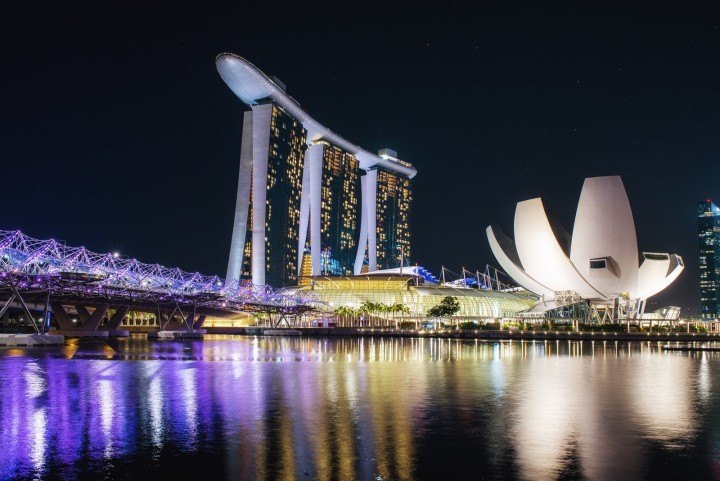
 singapore marina bay
Throughout my education, business and management professors have always seemed to agree on one thing: the best way to learn is by leaving the classroom and getting your hands dirty. In school, this typically meant working with companies or doing in-person consumer research. For work, it meant getting out of the office to meet new partners around the world. The first stop for Branch? Singapore.

A short and busy trip

Registering late, we were lucky to snag the last sponsorship spot at Echelon Conference 2015. Part of our sponsorship included supporting Top100, a competition between 100 of the best startups in Asia. This gave us the opportunity to interface with many of the young entrepreneurs building companies in the area. We were happy to find that many of these companies are building fascinating mobile products. Two startups that we particularly liked were ChaseFuture and Sup. Check them out.
The day after Echelon, we hosted our first Mobile Growth Hackers Singapore meetup. With the help of Viren Shetty, CEO of BookQuickly, we secured a spot at BASH @ Blk 79, a large tech incubator helping a number of young companies in an inspiring and expansive co-working space. Our panelists included Tomas Laboutka, CEO of HotelQuickly, Khang Ton, CTO and Co-Founder of PicoCandy, Anuj Bheda, Co-Founder of 99.co, and Arun Kumar, Head of Digital Marketing at Carousell. We received a lot of great feedback about the meetup, mainly that it was the only event in the area focused solely on mobile growth. By hosting it at the startup hub of Singapore, we were able to reach many entrepreneurs with mobile products. We will definitely be returning to Singapore to host another event soon!
Mobile Growth Hackers Meetup Singapore
Mobile Growth Hackers – Singapore
Our final day of the trip was at Walkabout Singapore, a full-day event where tech companies around the city open up their doors to anyone wanting to get a peek at what their employees are working on. With countless startups using BLK 69, 71, and 79 for office space, we spent the day learning about many of the interesting technologies being developed in these tightly packed buildings. Our tour not only included individual startup offices, but multiple incubators, accelerators, and coworking spaces, many of which are sponsored by top investors in the area. To our excitement, we even ran into some companies already using Branch to build virality into their products. Some of the interesting companies we met included MobiCart and MeMom.

What makes Singapore unique?

With the combination of these events, we were able to meet hundreds of developers from all over Southeast Asia. What was amazing about Singapore was that all of the developers we met were young, smart, and hungry to grow their products. They didn’t see the size of their country as a barrier since they knew that good products  easily cross international lines. This is important knowledge to have in a country with only 5.4 million people. Silicon Valley alone, in comparison, just recently passed the 3 million people mark.
What was also special was the willingness of the developers we met to introduce us to as many people as possible. After a short conversation, many people opened up their networks and introduced us to someone new. This was likely a function of the close proximity in which many of these companies inhabited. Many times the company they introduced us to was simply the door over or the floor above. It was clear that the startup culture in Singapore thrives on coalition and collaboration.

How does Singapore compare to Silicon Valley?

One of the things that made Singapore great was the large number of resources, per capita, focused on helping entrepreneurs. In one small block, you could find buildings with dozens of incubators, numerous accelerators, and hundred of startups. The accelerators were typically sponsored by local, large VC firms to house the companies they fund. The incubators, many of them government-sponsored, provided cheap coworking space for bootstrapped or freshly started companies. Although Silicon Valley has it’s fair share of startup incubators and accelerators, they are typically extremely competitive to get into or designated for companies striving to compete in billion dollar markets. It was refreshing to see small, recently formed teams all share one room while trying to create new companies in a variety of different industries.
Although both environments are and should be defined as technology hubs, the way they go about their business is drastically different. One of the most prominent differences I noticed was that Singaporean entrepreneurs do not necessarily launch their products in their home country. In Silicon Valley, it seems that almost every technology product is launched at home before it expands domestically or even internationally. Singaporeans understand the limits of their market and look to find ones that better fit the product they’ve created. When I spoke with Valerie Pang, who has recently worked atClickstream Ventures and Glints and is soon coming to the US to intern atThe Founder Institute, she described this as “thinking regionally” since they know that Singapore alone is a small market. However, this doesn’t mean they immediately aim for the larger markets like the US, India, or China.
With their close proximity to other countries it’s common to see initial product launches all over Southeast Asia. For instance, when we askedCarousell, a successful buying and selling platform started in Singapore about their growth, they talked about how they launched in Singapore, Malaysia, Indonesia, and Taiwan before making the jump to the US. This added another level of difficulty since each new country had their own unique differences. Carousell Co-founder, Lucas Ngoo, described Malaysia and Indonesia as the toughest markets so far because of the newness of the mobile infrastructure. In these countries they were faced with communities that were less interconnected, slowing the rate of growth. Listen to the podcast below to hear the rest of the conversation with the Carousell team.
Another major difference is the way startups raise money. Many Singaporean companies rely on small government grants to get them off the ground as opposed to Silicon Valley companies that rely on angel investors. Most of the government grants, found here, average around S$50,000 and are reserved for brand new startups. As stated by the government, they have “consciously crafted a pro-business, and supportive environment conducive to entrepreneurs who want to start a business.” Many of the companies that we met are using some combination of these government grants. It likely explains the high quantity of small teams that we interacted with.
But what about raising large sums of money to continue growing your company? In a meeting with one prominent venture capitalist in Singapore, he hinted at the limited capital available to startups in the area. This meant that not only are companies typically raising smaller sums of money, but investors are more selective in the companies they fund. To him, this meant focusing on companies that have established a business model that has been thoroughly tested and has proven potential to be profitable. His main takeaway to any startup in Singapore is to make sure to have a business model that works.

Should I take the leap and try Singapore?

Singapore was awesome and I enjoyed experiencing a startup culture different from that of Silicon Valley. It’s a great place to raise small seed rounds of funding and find many young, educated employees who strive to work on the next big startup. From there, growing will have its difficulties as you constantly explore new markets and compete for limited venture funding. But the task is not impossible. If you have a valuable product, and a business model that works, you’ll avoid much of the cutthroat competition that strangles so many Silicon Valley companies.
If you’re a young entrepreneur looking for a new place to call home to start a company or grow your app, consider Singapore as the place to go. With English as the primary language, it provides a soft landing for international entrepreneurs looking to move to Southeast Asia. After just a short trip to see all the mobile growth in the area, I can tell that some great new companies will come from the region for many years to come.

Source From: https://www.techinasia.com

The Oxford Place Development

Amidst the debate over whether Toronto will accept a new casino, Oxford Properties has released more detailed and evolved renderings of how their proposal for a redeveloped Metro Toronto Convention Centre would look. In October 2012 Oxford released an initial plan for the site, to be renamed Oxford Place, with the disclaimer "For massing / illustration only" (reproduced below). The rendering shows four new towers rising from an entirely new set of podium buildings along with a landscaped park deck over the railway corridor leading to Union Station. The disclaimer in the lower right corner indicated that the architecture for the proposal was still at too early a stage for the viewer to take as an indication of how the final proposal would look.
Initial massing rendering of the Oxford Place redevelopment in Downtown TorontoInitial massing rendering of the Oxford Place redevelopment, image courtesy of Oxford Properties
Four new renderings from renowned London-based Foster + Partners Architects now show how the proposal has developed over the intervening months. While these new renderings still should not be read as the final proposal at this point, there are many more clues as to Oxford's intensions for the site that can be extracted from them.
The rendering below shows how the completed project would look to someone looking across the intersection from the northeast corner of Front and Simcoe streets. Closest to the viewer is the complex's podium sheathed with vast amounts of glass, revealing an illuminated ceiling presiding over a three-storey high entry space.
Oxford Place redevelopment seen looking southwest along Front Street, TorontoOxford Place redevelopment seen looking southwest along Front Street, image courtesy of Oxford Properties
More detail can be gleaned from the enlargement accessed by clicking the image below: the podium entrance leads to both convention centre and retail mall uses, while the towers rising behind appear to have a double skin, indicated by the overhangs indicated behind the exterior glazing at each floor. At the back right of the rendering the hotel proposal has developed far beyond the initial simple oval cylinders seen the in the massing rendering.
Oxford Place redevelopment seen looking southwest along Front Street, TorontoClick for a higher-resolution look at the details of the proposal
Below, a refreshed park on the north side of Front Street sits across from the new twin 70-storey towers. Lower levels of the towers would be office space, while the upper levels would have residential rental units.
70-storey Office and residential towers will sprout on Front Street, Toronto70-storey Office and residential towers will sprout on the south side of Front Street, image courtesy of Oxford Properties
The retail mall can be seen continuing through the podium levels in the enlargement below. The towers themselves now appear much more slender on the north-south axis than in the earlier rendering.
70-storey Office and residential towers will sprout on Front Street, TorontoClick for a higher-resolution look at the details of the towers
The interior of the complex, looking southwest towards the CN Tower from the sky lobby space between the two towers, is bathed with natural light from massive windows and skylights. An expansive food court here is handy for the 10,000 office employees who could work in the complex.
The interior of Oxford Place has expanses of glass and balconied spaces, TorontoAn interior rendering indicates expanses of glass and balconied spaces, image courtesy of Oxford Properties
Many levels of the balconied mall and convention centre space can be seen more clearly by clicking to access the enlargement below.
The interior of Oxford Place has expanses of glass and balconied spaces, TorontoClick for a higher-resolution look at the details of the interior
The western portion of the project is the location of the proposed casino and hotel, both with an opulent exterior distinguished by cylindrical volumes.
Oxford Place Casino from Front and John Streets looking southwest, TorontoThe casino as seen from Front and John Streets looking southwest, image courtesy of Oxford Properties
Seen more clearly by clicking on the enlargement below are the stairs on the left leading from Front Street up to the park deck over the railway corridor, and eventually down again to ground level beside the CN Tower, the Rogers Centre, and the new Ripley's Aquarium. Will the exterior escalators pictured have a chance of operating reliably in Toronto's climate? Meanwhile, the Front Street sidewalk experience is marked buy up-market shops.
Oxford Place Casino from Front and John Streets looking southwest, TorontoClick for a higher-resolution look at the details of the casino
In the enlargement below, while the hotel tower features cut-out sections for trees, the standout feature of the casino here seems to be the entry area topped by a rooftop pool with a see-through base and sides. Could this feature possibly make it through to construction? There's a long way to go before we will know.
Oxford Place Casino Hotel from Front and John Streets looking southwest, TorontoClick for a higher-resolution look at the details of the casino and hotel
While Oxford has stated that none of its proposed redevelopment will go ahead without the casino component, many in the city's development community consider the statement a bluff. A casino may be approved at another site in Toronto, which would still increase the draw for conventions in the city, and the changing convention market likely requires a redesigned convention facility for the city to be more competitive regardless.
That a casino will be allowed anywhere in Toronto is not a certainty, with many prominent personalities and civic leaders lining up against one. A casino at Oxford Place, meanwhile, has also specifically attracted opposition from locals concerned with the area's ability to handle any more traffic, as has a proposal at Exhibition Place. Other sites proffered as potential locations in the city include Woodbine Race Track in Rexdale and sites near the Toronto Harbour.


Source From: http://urbantoronto.ca