Sunday, April 24, 2016

Top 10 Resort in Malaysia

Thailand is definitely not the only country in southeast Asia with stunning beaches and islands. Malaysia has dozens of islands on both the east and west coasts that easily rival the beauty of those in Thailand. In addition, Malaysia’s beach resorts rank as some of the best in the region. This list presents the best beach resorts in Malaysia, as rated by visitors.
10Bunga Raya Island Resort & Spa
Bunga Raya Island Resort & Spa
The Bunga Raya Island Resort & Spa is located in a secluded spot close to the city of Kota Kinabalu. Cable television service, air conditioning, high speed Internet and minibars are available in every room. The villas at the Bunga Raya Island Resort & Spa also feature balconies. The beach resort has modern amenities but features a design that incorporates many of the characteristic elements of Borneo architecture such as timbered construction. The villas are located on the beach where they enjoy sweeping views of the South China Sea.
9The Westin Langkawi Resort & Spa
The Westin Langkawi Resort & Spa
Set in an idyllic natural retreat on the island of Langkawi, the Westin Langkawi Resort & Spa boasts its own private beach. Tastefully designed with contemporary decor, all 202 rooms and suites offer modern amenities such as a 42″ plasma TV with satellite channels and internet access. Guests can cool down in the infinity pool, relaxation ocean pool or on the white sandy beach while enjoying the magnificent view of neighboring islands.
8Tanjung Rhu Resort
Tanjung Rhu Resort
Tanjung Rhu sits on the northern tip of Langkawi at on one of the most peaceful and beautiful beaches on the island. It is the only resort on this part of the island ensuring its exclusivity and the privacy of its guests. The resort is flanked by a landscape of centuries-old limestone caves and uninhabited islands. Every room is spacious, with timber floors and large windows, to take advantage of the tropical breeze and a choice of enchanting garden, pool or sea view.
7Shangri-La's Tanjung Aru Resort & Spa
Shangri-La's Tanjung Aru Resort & Spa
The Shangri-La’s Tanjung Aru Resort & Spa is nestled in beautiful natural surroundings in Kota Kinabalu. Shopping and entertainment venues are close by. There are private balconies attached to all of the rooms at the Tanjung Aru Resort. Guests can choose between six different restaurants and bars. The hotel also offers extensive spa services to its guests.
6Shangri-La's Rasa Ria Resort
Shangri-La's Rasa Ria Resort
The Shangri-La’s Rasa Ria Resort is situated just over a half an hour from the center of Kota Kinabalu. The hotel is close to crystal clear waters and pristine beaches. The facilities at the hotel itself include a restaurant that serves California dishes, a gym, a steam room and a massage service. There is also a swimming pool and the hotel even has its own golf course.
5Pangkor Laut Resort
Pangkor Laut Resort
Pangkor Laut is a privately owned island located three miles off the West Coast of Malaysia along the Straits of Malacca. There is no other resorts on the island, just secluded bays curled around pristine beaches and a deep sense of serenity reserved exclusively for the guests. The villas are carefully positioned along the island. Some are on the hillside amongst tropical rain forest, others in lush tropical gardens, and others overlook the beach with beautiful views of the sea.
4Four Seasons Resort Langkawi Malaysia
Four Seasons Resort Langkawi Malaysia
The Four Seasons Resort Langkawi is located on the Tanjung Rhu Beach. All guest pavilions and villas offer the soothing sounds of the Andaman Sea and sensational views of sunsets beyond the beach. The guest accommodations are a fusion of traditional Malaysian design elements and contemporary resort features, with timber floors, soaring ceilings and large open verandas. The standalone villas offer complete privacy overlooking the azure sea. The spacious patio outside the room is furnished with a dining table for four and an oversized daybed. The living area includes a 42 inch plasma screen television and high speed internet.
3The Datai Langkawi
The Datai Langkawi
The Datai Langkawi Hotel features a variety of villas and suites set against a tropical rainforest atmosphere in close proximity to the beach. Facilities are plentiful and include a gym, health club, sauna and not one but two pools. The larger of the two pools is elevated among the forest canopy, with stunning views through the tree tops to the sea below. The other pool is located down near the beach for those who wish to enjoy refreshing sea breeze. The resort contains five specialty restaurants serving a range of global cuisine. Situated high up in the rainforest canopy, The Pavilion restaurant for example serves authentic Thai cuisine in an open-air setting.
2The Danna Langkawi Malaysia
The Danna Langkawi Malaysia
The Danna Langkawi is located on Pantai Kok in the northwest of Pulau Langkawi. Set in a five-storey building, the beach resort offers spectacular views of the sea, marina and mountains. It comes with facilities such as a fitness center, spa, and games room. The luxury hotel comes with a mix of local architectural design and British colonial style, with a vibrant greenery of the landscaped courtyard overlooks the pool. The 125 rooms and suites are equipped with a host of modern amenities and are designed with timber flooring and handcrafted woodwork.
1Casa del Mar Langkawi
#1 of Malaysia Beach Resorts
Rated as one of the best Malaysia beach resorts, the Casa del Mar in Langkawi, sits on Pantai Cenang Beach. This is one of the most popular entertainment areas in Langkawi with a wide selection of restaurants and pubs nearby. All hotel rooms face the sea and are cooled by air-conditioning and ceiling fans. Floor to ceiling sliding picture windows provide great views of Cenang Beach. Deluxe rooms are located on the ground floor and suites are on the first floor.


Source From: http://www.touropia.com
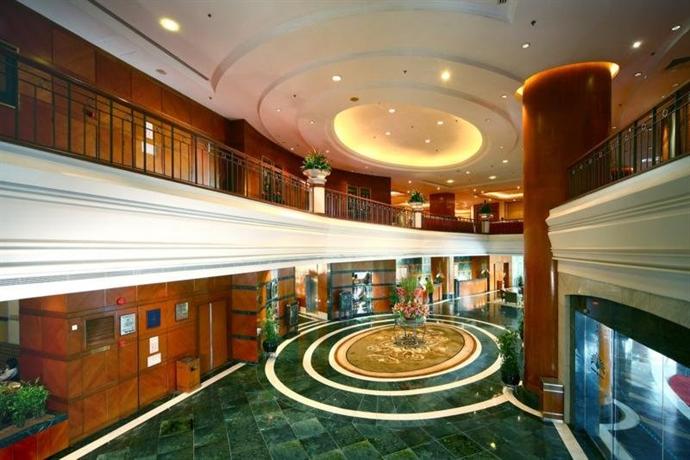
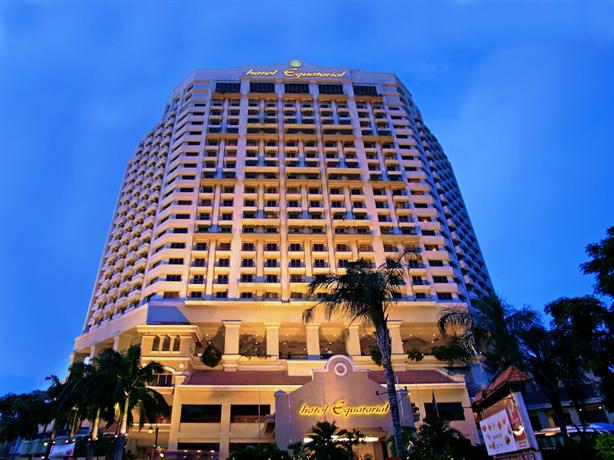
Equatorial Melaka and Mutiara Johor Bahru Hotel In Malaysia


Hotel Equatorial Melaka


Located in Malacca, Hotel Equatorial Melaka is within a 30-minute drive of Malacca International Airport and offers a sauna, a swimming pool and outdoor tennis courts. A limousine service and valet parking are just some of the luxurious amenities available to guests during their stay.

Equatorial Hotel Melaka Malaysia has recently been refurbished and offers a beauty centre, a ballroom and a Jacuzzi. It includes family-friendly amenities, with room layouts and services for families of any size, as well as a kids pool and babysitting/child services.

Equatorial in Melaka features elegant rooms equipped with a refrigerator, a mini bar and a spa bath. Each provide slippers, a kitchenette and a private bathroom with a shower.

Hot breakfasts are available at Seri Nyonya and Kampachi every morning before guests go out to explore the local area. Each evening, guests are welcome to relax in the comfortable lounge bar. A buffet breakfast is served every morning.

Malacca's well-known attractions are within close proximity to Equatorial Melaka, with the A Famosa just minutes away. AEON Bandaraya Melaka Shopping Centre is within an easy car ride from the hotel.


Mutiara Johor Bahru Hotel


Mutiara Johor Bahru Hotel provides 4-star accommodation in Johor Bahru. It also features valet parking, a swimming pool and an executive floor.

Hotel Mutiara Johor has recently been refurbished and provides 24-hour room service, a kids pool and a coffee bar. Attentive and professional team members are available 24-hours a day.

Each room at Mutiara Johor Bahru Hotel includes a mini bar and a refrigerator, while the bathrooms feature hair dryers and showers. They provide tea and coffee making facilities, movies-on-demand and bottled water.

Mutiara offers a variety of meal options with in-house restaurants, Capri and Seri. A range of breakfast options are available in the hotel's dining room.

Senai International Airport is only a 30-minute drive from Mutiara Hotel Johor Bahru, and a shuttle service is offered for guests. AEON Bukit Indah Shopping Centre is within a 20-minute drive from the hotel.

Source From:  http://hotel.cheapmalaysiarooms.com

book the cheapest hotel in Malaysia


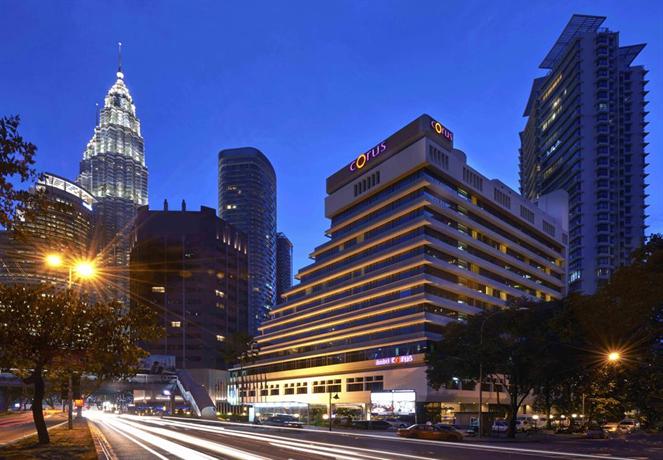
Conveniently situated, Corus Hotel Kuala Lumpur offers easy access to Kuala Lumpur's popular hot spots. It provides a gym, as well as a swimming pool, a sauna and a beauty centre.

This cosy hotel offers valet parking, a ballroom and an executive floor. It provides babysitting services, a currency exchange and a reception that operates 24 hours a day.

Each contemporary room at Corus Hotel Kuala Lumpur comes with a mini bar and a sofa bed, while the bathrooms offer hair dryers and bathrobes. Hot drinks can be brewed with the available tea and coffee supplies, and savoured in the comfort of the room's sitting area.

Corus Hotel KL features both a restaurant and a bar where guests can unwind at the end of the day with dinner and a drink. Places to dine at the hotel include Dondang Sayang Coffee House and Komura. A selection of cafés and restaurants can also be found in the area. 

Malaysia is one of the most visited country here in Asia, comes with many attractions to explore. The tropical green forest, flora & fauna, hillsides, beaches, islands, city attacrtion and many more!.
There are various range of hotels here in in Malaysia, from cheap ones, budget, guest house, reasonable, affordable and luxury. Most hotels in Malaysia are equiped with basic amenities like 24 hours reception, banquet facilities, TV, phone, refrigerator, air conditioned, safe deposit box, lift, restaurant, laundry services and many more.
Like any other hotel in other country, here in Malaysia we also have hotel star ranking base, from two, three, four & five star. Usually two star hotel only have basic amenities mentioned above, some might have lesser ammenities item.
A three star hotel in Malaysia have additional stuff like swimming pools, spa, high speed broadband while maintaining simple looks
For a four star hotel, it's somewhat luxury, but affordable, not to expensive and not so cheap, it comes with allmost all amenities required
Lastly the five star are the luxury hotels in Malaysia, it should be self explanitory. Basically the additional things you'll be getting from a five star luxury hotel will be their better services. they will definately take good care of your needs, if you are not satisfied, fire away your compliants at the reception.
Get instant confirmation when you book your stay on CheapMalaysiaRooms.com! We will show you the cheapest available hotel rate for your holiday!

Source From:  http://hotel.cheapmalaysiarooms.com

four stars hotel in the Corpus Christi area

  •  
    This hotel is not worth a four star rating. We looked up nice hotels with four stars in the Corpus Christi area, and this is the only one that came up. Every chance I get, I stay at Omni hotels, so why not try this one for myself? We booked two "Premier King Bay View facing rooms for a grand total of $387 for one night. Photos looked amazing, but the rooms were sub par for any four star I've stayed in (the night before we stayed at The Royal Sonesta Houston - 4 stars, and TOTALLY worth every star, and was even cheaper!!).

    First problem - we pulled into valet only to wait for no one to assist us for 10 minutes or more. Then there was no bellhop for baggage. Next, we waited in the check-in line only to be assisted with two people because they didn't have our rooms ready, and it was past 3p (their check in policy time!).

    Amenities: Their "heated pool" was not very warm, the hot tub was right next to the pool where children were jumping in and splashing us - not an enjoyable, relaxing experience at all. They had no cardio machines in their gym facility, which is about 200sq ft. Balconies had no chairs to sit and enjoy the view. The showers and sinks did not drain, and you stand in an inch of water while showering. The iron left a white powder residue on my brand new shirt. I was charged $9.95 for WiFi which wasn't even posted on their login page. We couldn't get change at the front desk to tip the valet when leaving, but that didn't matter because valet didn't even offer to help load up our luggage.

    I will never recommend this hotel; you'd be better off at the Holiday Inn Express. At least there you know you get what you pay for. Save your vacation some money and go somewhere else!

Friday, April 22, 2016

Two airports in northern Thailand


BANGKOK (AP) — Two airports in northern Thailand said Wednesday that nearly 150 flights will be canceled or rescheduled during a three-day festival next week when revelers launch lanterns into the sky that can pose danger to airplanes.
The cancellations will affect evening flights from Nov. 24-26, when Thailand celebrates the Loy Kratong festival.
Chiang Mai International Airport, the main airport in northern Thailand, said in a statement that it will cancel 84 flights, including 12 to international destinations, during the three-day festival period. It will also reschedule 51 flights.
Chiang Rai International Airport plans to cancel six flights and reschedule five during the same period, said airport official Saengduan Hongsaenkham.
Most of Thailand celebrates the festival by floating small boat-shaped baskets with flowers and candles into lakes and rivers to carry away their bad luck. But revelers in northern towns choose to send off their bad luck in hot-air balloons or lanterns.
Traditionally, the lanterns were from lightweight bamboo and paper, with a candle inside to provide hot air to lift them into the sky. But lately they have become larger and more powerful and sophisticated, with some using fuel canisters and heavy frames.
The Chiang Mai airport urged revelers to respect a city regulation that residents from five districts surrounding the airport can only release lanterns on Nov. 25 after 9 p.m.
Officials will be assigned to monitor the runways to remove any lanterns, the statement said. During last year's festival period, 142 lanterns landed on the runway, down from 1,414 in 2013, thanks to awareness campaigns.

Source From: http://www.sandiegouniontribune.com

The Kingdom of Thailand is an independent country

History, Culture and Climate

The Kingdom of Thailand is an independent country that lies in the heart of Southeast Asia.
It is bordered to the north by Laos and Burma, to the east by Laos and Cambodia, to the south by the Gulf of Thailand and Malaysia, and to the west by the Andaman Sea and Burma. Its maritime boundaries include Vietnam in the Gulf of Thailand to the southeast and Indonesia and India in the Andaman Sea to the southwest. The capital and largest city of Thailand is Bangkok. It is also the country's center of political, commercial, industrial and cultural activities.
History

The region known as Thailand has been inhabited by humans since the Paleolithic period, about 10,000 years ago. Prior to the fall of the Khmer Empire in the 13th century, various states thrived there, such as the various Tai, Mon, Khmer and Malay kingdoms, as seen through the numerous archaeological sites and artifacts that are scattered throughout the Siamese landscape. Prior to the 12th century however, the first Thai or Siamese state is traditionally considered to be the Buddhist kingdom of Sukhothai, which was founded in 1238.
Following the decline and fall of the Khmer empire in the 13th - 14th century, the Buddhist Tai Kingdoms of Sukhothai, Lanna and Lan Chang were on the ascension. However, a century later, Sukhothai's power was overshadowed by the new kingdom of Ayutthaya, established in the mid-14th century in the lower Chao Phraya River, or Menam area. Ayutthaya's expansion centered along the Menam while the in the northern valley, Lanna Kingdom, and other small Tai city-states, ruled the area.
After the fall of the Ayutthaya in 1767 to the Burmese, King Taksin the Great moved the capital of Thailand to Thonburi for approximately 15 years. The current Rattanakosin era of Thai history began in 1782, following the establishment of Bangkok as capital of the Chakri dynasty under King Rama I the Great. A quarter to a third of the population of some areas of Thailand were slaves.
Thailand retained a tradition of trade with its neighboring states, from China to India, Persia and Arab lands. Ayutthaya became one of the most vibrant trade centers in Asia. European traders arrived in the 16th century, beginning with the Portuguese, followed by the French, Dutch and English.
Despite European pressure, Thailand is the only Southeast Asian nation that has never been colonized.
Two main reasons for this were that Thailand had a long succession of very able rulers in the 1800s, and that it was able to exploit the rivalry and tension between the French and the British. As a result, the country remained a buffer state between parts of Southeast Asia that were colonized by the two colonial powers. Despite this, Western influence led to many reforms in the 19th century and major concessions, most notably being the loss of a large territory on the east side of the Mekong to the French and the step-by-step absorption by Britain of the Shan (Thai Yai) States (now in Burma)[citation needed] and the Malay Peninsula. The losses initially included Penang and Tumasik and eventually culminated in the loss of four predominantly ethnic-Malay southern provinces, which later became Malaysia's four northern states, under the Anglo-Siamese Treaty of 1909.
In 1932, a bloodless revolution carried out by a small group of military and civilian officials resulted in a transition of power, when King Prajadhipok was forced to grant the people of Siam their first constitution, thereby ending centuries of absolutist monarchy. During World War II, the Empire of Japan demanded the right to move troops across Thailand to the Malayan frontier. Japan invaded the country and engaged the Thai army for six to eight hours before Phibunsongkhram ordered an armistice. Shortly thereafter Japan was granted free passage, and on December 21, 1941, Thailand and Japan signed a military alliance with a secret protocol wherein Tokyo agreed to help Thailand regain territories lost to the British and French. Subsequently, Thailand undertook to 'assist' Japan in its war against the Allies, while at the same time maintaining an active anti-Japanese resistance movement known as the Seri Thai. After the war, Thailand emerged as an ally of the United States. As with many of the developing nations during the Cold War, Thailand then went through decades of political instability characterized by coups d'état as one military regime replaced another, but eventually progressed towards a stable prosperity and democracy in the 1980s.
In 1997, Thailand was hit by the Asian financial crisis, and the Thai baht for a short time peaked at 56 baht to the US dollar compared to about 25 baht to the dollar before 1997. Since then, the baht has regained most of its strength and as of May 2009 is valued at 35.17 baht to the US dollar.
The official calendar in Thailand is based on the Eastern version of the Buddhist Era, which is 543 years ahead of the Gregorian (western) calendar. For example, the year AD 2009 is 2552 BE in Thailand.
Local Thailand time: GMT + 7 Greenwichmeantime.com
Mainland Territory: 514,040 sq. km
Population: 65,444,000 (est 2006)
National Capital: Bangkok

Climate
Thailand's climate is tropical, high both in temperature and humidity, and dominated by monsoons. April and May are the hottest months of the year, when even the locals are moved to complain about the heat. June sees the beginning of the South West Monsoon, and brings with it the rainy season, which continues intermittently until the end of October.
From November to the end of February the climate is much less trying with a cooling North East breeze and a reduction in the humidity level. This is also the main tourist season, and the best time to visit Thailand. The north and north-east are generally cooler than Bangkok in winter, and hotter in summer. In the far north, around Mae Hong Son temperatures can occasionally drop as low as 2oC
Language
Thai is one of the oldest languages in East and South-East Asia. It is a monosyllabic language which uses five tones (high, mid, low, rising, and falling tone) to alter the meaning of a single syllable. This makes it rather tricky to learn for most Westerners used to speaking non-tonal languages.
The Thai script, introduced by King Rham Khamhaeng in 1283, consists of 44 consonants and 48 vowels, and is of Sanskrit origin.
Population and People
Thailand is often called the "land of smiles", and rightly so because you will see more smiling people here than anywhere else in the world. The country has a population of about 59 million, with some 6.7 million of these people living in the Bangkok area. Approximately 75% of the citizenry are ethnic Thais, 14% are Chinese, and the remaining 11% are mostly Indian, Malay, Karen, Khmer, or Mon. The literacy rate is high at about 94% and the average life expectancy is 66 for men and 72 for women.
Thai people are friendly and tolerant but there are a few Do's and Don'ts which you should observe. Avoid touching people on the head, and keep your feet on the ground where they belong. Stay calm, smile and enjoy the hospitality of your hosts.
The official language is Thai, but English is widely spoken in all major tourist locations. However if you are travelling around Thailand it is a good idea to buy a phrase book

Festivals and Holidays

New year’s day
In 1940, Thailand moved its New Year's Day from April 13th to January 1st. The old New Year is still a holiday called Songkran. Years are counted as the Buddhist era (B.E.) which started 543 years earlier than the Christian, era, therefore 2002 AD is the year 2545 BE.
Makha Bucha Day
End of February/beginning of March, depending on the moon. This commemorates the day when 1250 of Buddha's disciples gathered spontaneously to hear him preach. Buddhists visit Wats and make merit by such acts as releasing caged birds. In the evening the celebrations culminate in a candle lit procession around the main temple building.
Songkhran 13-15th April
This is the celebration of the old Thai New Year. Buddhists visit the temple for the ceremony of Rod Nam Dam Nua. They sprinkle water on the Buddha images, and on the hands of the
monks and novices at the temple, as an offering to express confidence that the supply of water will be adequate to cover the dry season.Songkhran is a time when the Thai family will try to be together, and many people will travel back to their home village. This holiday has now become secularized, with exuberant merrymakers taking to the streets throwing water at each other, and you, by the cup full, the bucket full, or even with a hose. To add to the fun, talc is mixed with the water and may be daubed on your face. Take it all in good spirit, no one is exempt, not even the policemen. The cool water may even be a welcome relief as the festival coincides with the time when the sun is due overhead and the weather can be very hot.

Religion
About 95% of the Thai population are Buddhist, which is a religion based on the teachings of Buddha, "the enlightened". Siddhartha Gautama, the Lord Buddha, was born in 623 B.C. in Lumbini Nepal, and subjected himself to many years of severe austerities to arrive at a vision of the world which is the basis of Buddhism. Gautama Buddha spoke of four noble truths :
History, Culture and Climate
  • "Existence is suffering" (The truth of suffering).
  • "Suffering is caused by desire" (The truth of the cause of suffering).
  • "Eliminate the cause of suffering and the suffering will cease to arise" (The truth of cessation of suffering).
  • "The eight fold path (or middle way) is the way to eliminate desire" (The truth of the path).
The main theme of Buddhist belief is that of karma, the evaluation of all life's events and, after ones death, the rebirth of that karma in a new existence. In this way everyone has it in his own hands to determine his next life, for better or worse. The Thai proverb "do good and receive good, do evil and receive evil" sums up this concept well. Buddhism is ever present in Thai life from the myriad Buddha images to the saffron-robed monks and many wat (temples) at which local people worship. As a visitor to Thailand you are welcome to visit the wat but please remember to dress respectfully, no shorts or vests. Remove your shoes before entering any temple building, and never touch the head of a Buddha image.


Source From: http://www.anntours.com

Trip in puhket, Thailand

Phang Nga Bay

A distinctive feature of Phang Nga Bay are the sheer limestone karsts that jut vertically out of the emerald-green water.  James Bond Island and Koh Panyee are just two of the more famous spots in this bay. By far the best means of enjoying the spectacular scenery, with only brief encounters with the tourist crowds at James Bond and Koh Panyee, is to take one of the boat trips from the northern end of Phuket.

A leisurely day trip cruising through the dramatic limestone islands, occasionally stopping to enjoy quiet beaches, is far more rewarding than the standard bus-boat tou

James Bond Island

This famous landmark, called Koh Ta-pu ('Nail Island'),

 first found its way onto the international map through its starring role in the James Bond movie 'The Man With the Golden Gun'. And this is where most tours seem to take all of the tourists - all at the same time. The entire area surrounding this island with its signature rocky pinnacle is indeed spectacular, but most of the tours bus visitors up the main highway for an hour on the same well-worn itinerary. An integral part of that tour is lunch at Koh Panyee, a nearby Muslim fishing village.

Koh Panyee

This is a remarkable village, the whole of it built out over water on stilts and with a giant rock monolith guarding its rear. At lunchtime, many tourists on the James Bond Island tours are brought in to eat and shop for handicrafts.


Koh Panyee is a small island. Most of it is huge, almost vertical, limestone cliffs. The hundreds of huts, shacks, restaurants and houses where the villagers live are built on stilts over the surrounding shallow sea. No one seems quite sure how many wooden and concrete piles hold up this extraordinary community, but it is certainly a fascinating and unique feat of informal engineering. At first, fishing was the sole industry for this Muslim community but nowadays it is No 2. These days, half the locals service the tourism industry and 40% are still fisherman. The village has its own school, a mosque, a health center, lots of small souvenir shops and a handful of large restaurants, all facing the sea, where tourists can enjoy a fresh seafood lunch.

Cruising Phang Nga Bay 

Phang Nga Bay is a great place for boating. The interesting limestone cliffs create a picturesque backdrop and there are many safe places to anchor.
The fact that it's protected from both the Northeast and the Southwest monsoon seasons means that its waters remain calm year-round, which adds to the appeal of its scenic wonders and abundant wildlife.


Source From: http://www.phuket.com